


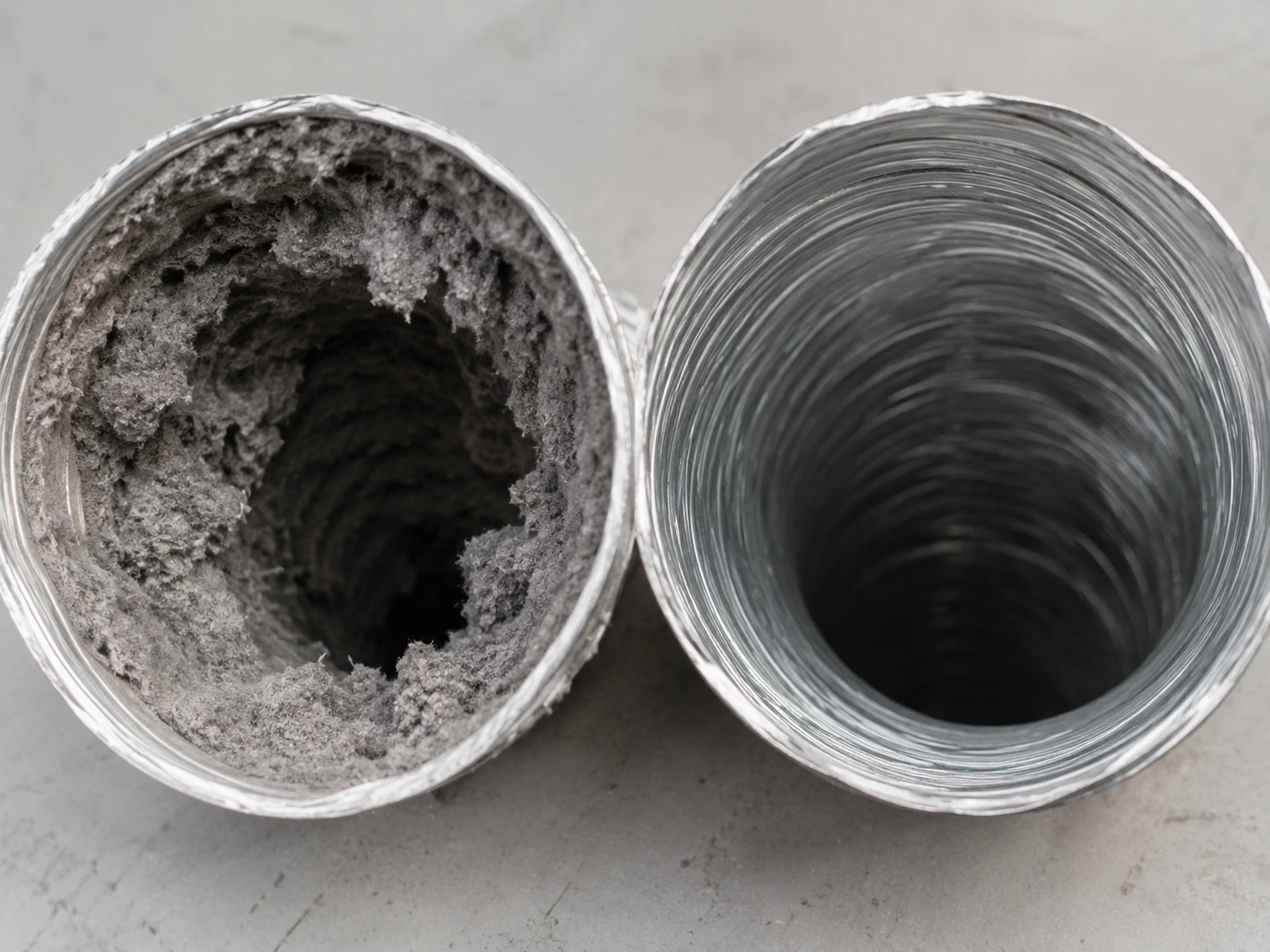
A spotless vent cover doesn’t necessarily mean the ductwork behind it is clean. Dust can settle several feet inside the ventilation system, far beyond what homeowners can see or reach with a household vacuum. Knowing what professional cleaning should accomplish makes it easier to judge whether the work was necessary and properly completed.
Clean Ductwork Means More Than Dust-Free Registers
Air ducts naturally collect small amounts of dust as heating and cooling systems move air through the house. Even with proper filtration, particles can settle around joints, bends, and return openings. A professionally cleaned system should be substantially free of accumulated debris, not completely free of microscopic particles. Expecting every interior surface to remain spotless isn’t realistic once normal airflow resumes.
Industry cleaning standards generally focus on removing visible deposits from accessible surfaces. Technicians use specialized equipment to loosen and collect material without damaging ductwork. Homeowners considering duct cleaning in Brentwood, TN should understand that the goal is to remove contamination, not make every passage look brand new.
What Should a Properly Cleaned Duct Look Like?
A cleaned metal duct should have no substantial loose dust, debris piles, or visible buildup remaining on the treated surfaces. Light discoloration, old marks, or minor surface imperfections may still be present. These don’t necessarily indicate poor cleaning, especially in older systems where years of use have affected the metal’s appearance.
Flexible and internally insulated ducts require different expectations. Their textured surfaces may look less uniform than smooth metal, even after technicians remove accumulated debris. The best duct cleaners assess cleanliness according to the material and condition rather than using appearance alone as proof of a successful job.
The Difference Between Cleaning and Sanitizing
Mechanical air duct cleaning removes physical material such as dust, lint, pollen, and construction debris. Technicians commonly use negative-pressure vacuum equipment alongside brushes or air-powered tools to dislodge deposits. Proper containment collects loosened particles before they spread into occupied rooms. This approach addresses accumulated debris without automatically introducing chemicals into the ventilation system.
Sanitizing involves applying products intended to reduce certain microorganisms. However, routine duct cleaning doesn’t require chemical treatment, and disinfectants should only be used when appropriate for the specific material and application. Homeowners should be cautious of companies claiming every ventilation system needs spraying. Clean air ducts aren’t sterile, and ordinary indoor air naturally contains microorganisms.
Does Cleaner Ductwork Mean Cleaner Indoor Air?
Removing accumulated debris reduces the material present inside treated duct sections. However, professional duct cleaning doesn’t eliminate everyday indoor dust sources such as carpets, clothing, pets, and tracked-in soil. Research has not consistently shown that routine cleaning improves indoor air quality or prevents respiratory symptoms in otherwise normal homes.
Effective filtration, regular housekeeping, and moisture control remain important after cleaning. Homeowners can also inspect filters for poor fitting or excessive buildup, since these problems may allow particles to enter the HVAC system. Professional duct cleaning services should explain these limitations rather than promising completely dust-free living spaces.
How Can Homeowners Verify That the Work Was Thorough?
Before-and-after photographs can show whether technicians removed visible deposits from the same duct sections. Inspection cameras and lighting may reveal areas that remain dirty or require additional attention. Documentation should identify accessible supply and return passages, cleaning methods, and sections technicians couldn’t reach.
Homeowners searching for the best duct cleaners in Brentwood, TN should ask how companies verify completed work. A reliable provider can explain what was cleaned and whether any damaged or contaminated components need separate maintenance. Residents comparing duct cleaning services in Brentwood, TN should also confirm that temporary access openings receive proper sealing.
Knowing When Duct Cleaning Is Actually Necessary
Visible debris inside ducts, contamination from construction work, or evidence of pest activity can justify professional inspection. A light layer of ordinary dust doesn’t automatically mean the entire ventilation system needs cleaning. Homeowners should consider the actual condition of the ductwork rather than following an arbitrary annual cleaning schedule.
Companies handling air duct cleaning in Brentwood, TN should evaluate visible deposits and explain whether mechanical removal would address the concern. Qualified technicians also recognize problems that cleaning cannot correct, such as damaged duct connections, moisture intrusion, or deteriorating insulation. Addressing those issues may require additional HVAC work.
Understanding What Professional Cleaning Should Deliver
A worthwhile cleaning appointment leaves accessible duct surfaces substantially free of accumulated debris while preserving the system’s condition. Proper containment, suitable cleaning tools, and documented results matter more than promises of perfect cleanliness. Homeowners who want to clean air ducts should expect a clear explanation of the work performed and any limitations discovered.
Knowing whether air ducts need cleaning starts with understanding what’s building up inside them. Mr. B’s Air Duct Cleaning works with homeowners to clear accumulated dust and debris from residential ventilation systems. Those unsure about their ductwork’s condition can reach out to the company to learn what professional cleaning involves, which areas need attention, and what results they can reasonably expect.
