


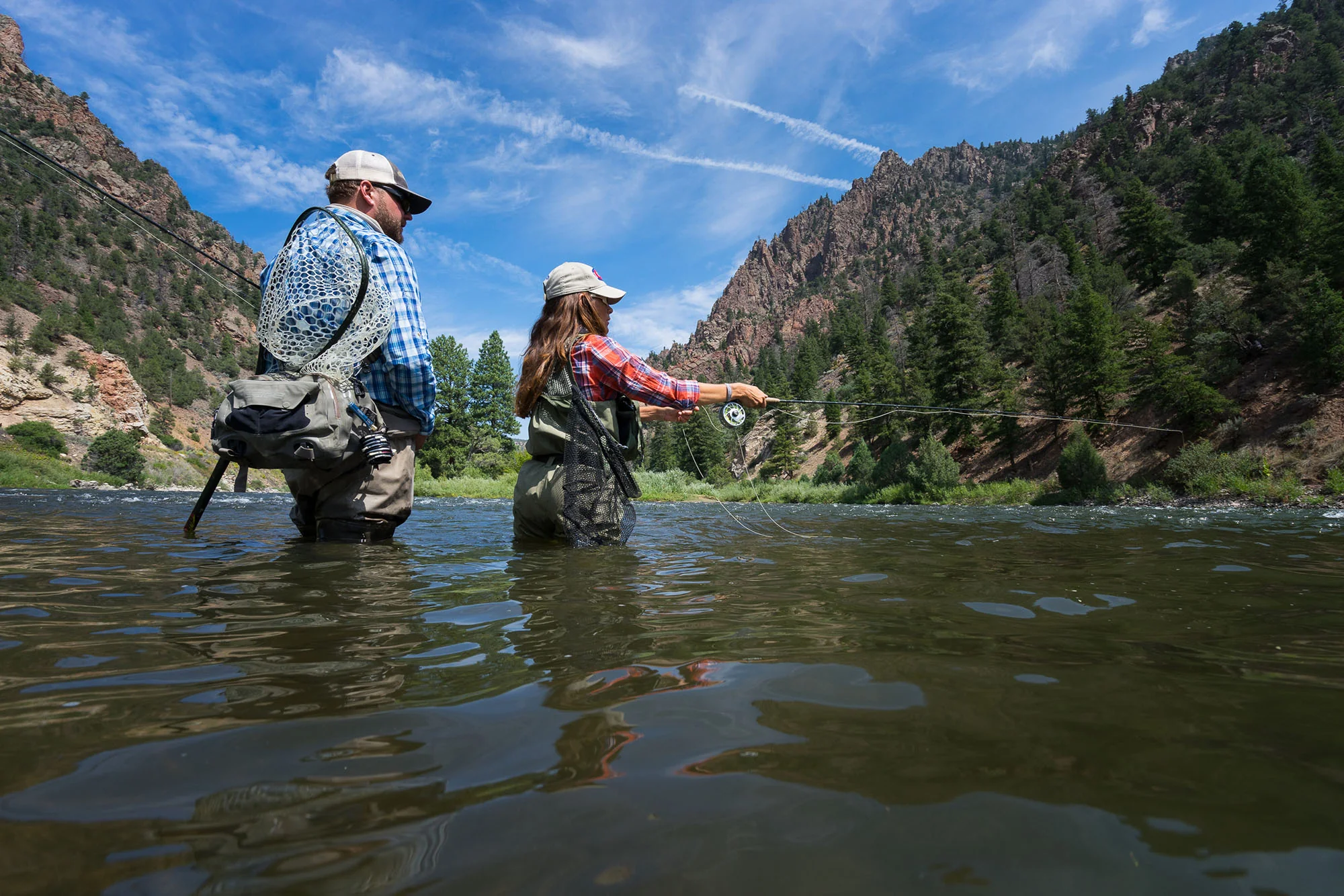
Fly fishing is a pursuit that tends to unfold in distinct phases, shifting from the initial excitement of rigging gear to the quiet, methodical rhythm of reading water. For those who find themselves near the mountain landscapes of the central Rockies, best fly fishing near Vail offers an entry point into a world where understanding the environment is often more important than the casting technique itself. This progression—from learner to observer—defines the experience for many who spend time on the water in this region.
Getting Started: Understanding the Aquatic Environment
The early stages of the sport often focus on the mechanics of the cast and the selection of patterns. However, the most effective approach typically involves stepping back to observe the stream before ever wetting a line. Rivers in high-altitude environments tend to be dynamic, shifting with the seasons and the cycle of snowmelt.
Beginners often find that success is less about having the “perfect” fly and more about understanding where fish seek shelter. Fish in these systems are typically conserving energy, holding in areas where current breaks or deeper pockets provide a shield from the main flow. Identifying these “holding lies” is a fundamental skill that transforms the experience from guesswork into a targeted effort. Rather than casting randomly, the goal becomes placing an offering into the specific lanes where fish are naturally positioned to feed.
The Evolution of Technique as Conditions Change
As experience grows, the focus naturally shifts toward adapting to the subtle variables of the river. The high-altitude streams around this area are susceptible to changing water temperatures and light levels, both of which influence how fish behave throughout the day.
An angler might start the morning using dry flies, relying on visual cues to detect a strike, only to find that as the sun climbs higher or the water warms, the fish move toward subsurface feeding. This is when techniques such as nymphing become highly effective. By adjusting the depth and weight of a rig, an angler can reach the zones where fish are actively foraging along the riverbed. Learning to read these shifts is a hallmark of developing as an angler. It involves paying attention to the small details—the way the light hits the water, the presence of specific insect life, and the general mood of the river—and adjusting one’s approach accordingly rather than sticking to a single method regardless of the conditions.
Signs of Progress and Knowing When to Adjust
A common question among those spending time fly fishing in Vail is how to measure progress. It is rarely reflected in the total count of fish landed, but rather in the quality of the interactions. Increased success in “reading” the water, improved efficiency in rigging, and the ability to diagnose why a particular presentation is or is not working are all significant markers of growth.
If an angler finds that fish are rising but refusing the fly, it may be time to examine the leader or the drag on the line. Often, the issue is not the pattern itself but the way the fly is drifting. If the line is dragging against the current, the fly will not move naturally, and fish are typically quick to notice the inconsistency. The ability to notice these micro-details—such as a line pulling a fly out of its natural drift—is often what separates a frustrating day from a productive one. When things are not going as expected, asking, “Is my presentation mimicking the natural insects in this specific current?” is a more useful diagnostic approach than simply changing flies.
Sustaining Results Through Long-Term Stewardship
Sustaining a meaningful connection to fly fishing near Vail over the long term requires a commitment to the health of the rivers themselves. These are fragile ecosystems, and their viability depends on careful interaction. Practicing responsible catch-and-release techniques, minimizing time spent handling fish out of the water, and respecting the bank vegetation are all parts of ensuring these streams remain productive for seasons to come.
As the years pass, the most seasoned anglers often find that the value of the sport shifts. While the thrill of the strike remains, it is often complemented by the appreciation for the landscape, the clarity of the water, and the unique challenges presented by high-altitude river systems. By focusing on observation, technique, and stewardship, one builds a foundation that allows for continued learning and engagement with the river.
The long-term picture of this pastime is one of continuous discovery. Whether you are navigating the eddies of a local stream or exploring broader sections of mountain water, the key is to maintain curiosity. There is always a new hatch to understand, a different type of water to interpret, or a subtle refinement to be made to one’s cast. For those drawn to the sport in this region, the water serves as both a teacher and a destination, offering a steady, quiet challenge that can be pursued for as long as one chooses to walk the banks.
