


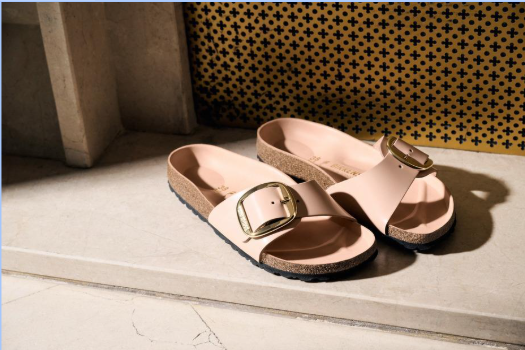
We have all bought sandals that looked perfect in the store and felt unbearable a few hours later. The good news? Truly comfortable sandals do exist, and once you know what to look for, shopping for them becomes much easier.
Whether you are hunting for sandals for women or men that survive a full workday, navigating puddle-happy streets in your search for the right monsoon footwear for women, or simply trying to find a pair of black sandals for women that goes from brunch to an evening stroll, these five features are the non-negotiables.
-
The Footbed: Where Comfort Either Lives or Dies
A flat footbed is essentially a plank of wood for your arch. The anatomy of your foot curves, rises, dips, and spreads, and a good footbed should mirror every one of those contours.
Look for:
- Deep heel cups that cradle and stabilise rather than let your foot slide
- Arch support that meets your midfoot, not just approximates its location
- Toe bar or raised toe grip that activates natural gripping muscles
The cork-and-latex footbeds popularised by the Arizona, Mayari, Madrid, Gizeh, Boston and other Birkenstock styles have become something of a benchmark here precisely because cork is self-moulding. It compresses to your unique foot shape over time, which is why sandal lovers swear these feel better in year two than on day one.
-
Strap Placement and Adjustability
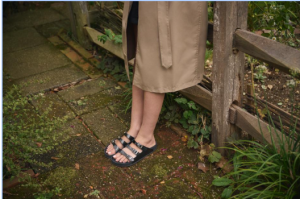
This is the feature most people overlook until their foot has swollen slightly after a long commute and suddenly the straps feel like tiny tourniquets.
Good strap design accounts for:
- Multiple points of adjustment (not just a single buckle near the toe)
- Soft or padded edges that don’t dig into skin during movement
- Placement that distributes pressure rather than concentrating it at one point
This is especially important if you usually wear darker, minimal outfits. The best black sandals for women should fit securely without pinching or slipping. Straps that dig in become uncomfortable over time, while loose straps can make you walk awkwardly just to keep the sandals on.
Closed-toe silhouettes like the Birkenstock Boston solve some of this equation differently by enclosing the foot for more even hold, which is especially useful during cooler or wetter months when open straps feel precarious.
-
Sole Thickness and Material
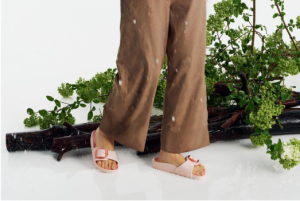
The sole is your only barrier between your foot and every pavement, cobblestone, and grocery store floor you encounter. It needs to absorb shock without making you feel like you are wobbling on a mattress.
What works:
- EVA or polyurethane midsoles for cushioned absorption without excessive weight
- Rubber outsoles for grip, especially critical for monsoon footwear for women where wet surfaces are a genuine hazard
- Sole thickness of 15 to 30mm for daily wear (too thin is punishing, too thick disrupts balance)
-
Toe Box Width and Freedom
Your toes need space to spread naturally when you walk. If they are squeezed together, your feet cannot move properly, which can lead to discomfort and fatigue by the end of the day.
What to check:
- Width at the widest point of the toe box (your toes should not be touching the edges)
- No raised lip or ridge that cuts across the knuckle of the big toe
- Enough length that your longest toe (which is not always the big toe, just to complicate things) sits 5 to 10mm from the front edge
Open-toe styles like the Birkenstock Madrid and Mayari sidestep the box issue entirely by leaving the toe area fully open, which is why they are often recommended for people with wider feet or those prone to swelling, making them surprisingly effective as monsoon footwear for women in humid, feet-swelling conditions.
The Final Word
Comfortable sandals for women and men are not about spending more. They are about knowing what you are buying.
The right pair should support your foot so naturally that you stop thinking about them halfway through the day. And when comfort, fit, and construction work together properly, daily wear stops feeling like endurance and starts feeling effortless.
